

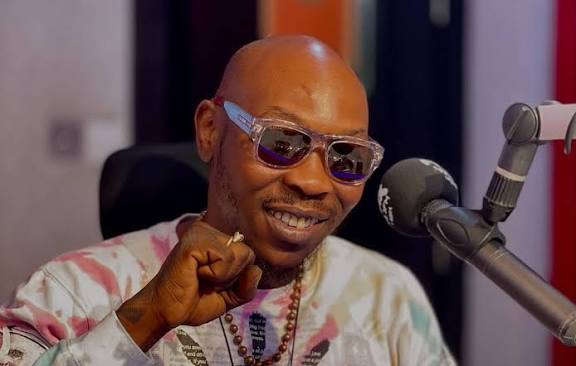
Afrobeat musician and activist Seun Kuti has sparked intense reactions online after openly declaring that he does not believe in prayer and has never prayed in his life.
The outspoken singer made the remarks in a recent video shared on his official Instagram page, where he questioned the relevance and effectiveness of prayer in solving real-life problems.
According to Seun Kuti, prayer is “childish” and does not shape human destiny, insisting that choices and actions are what truly define a person’s life.
“I have never prayed before in my life. I don’t know how to pray. I don’t believe it works,” Kuti said.
He further argued that public or loud prayers are merely performative and meant to impress others rather than create change.
“Your life is your prayer. Praying in public or aloud is eye service. It is childishness,” he added.
Expanding on his stance, the Afrobeat star explained that personal responsibility matters more than religious rituals.
“Your life is the prayer. What you do with your life is your prayer. That is the only prayer. Your action is prayer,” he stated.
Seun Kuti also questioned the widely held religious belief about God’s will, suggesting that prayer is ineffective if outcomes are already predetermined.
“This concept of God that most people have is why prayer is completely null and void. You claim God has written everything from the beginning to the end, and his will must be done,” he said.
He added that prayers only work when they align with what clerics claim is God’s will, a narrative he believes is used to exploit people.
“Except your prayer aligns with his will… if it doesn’t, it won’t be answered. But clerics won’t tell you this because they want to exploit you,” Kuti alleged.
The singer concluded by stressing his belief in self-action over spiritual dependence.
“I solve my problems. I don’t pray over my problems. If prayer solves problems, prisons and hospitals would be empty,” he said.
As expected, Seun Kuti’s comments have triggered heated debates online, with social media users divided between supporting his blunt honesty and criticizing his rejection of prayer and religious belief.