


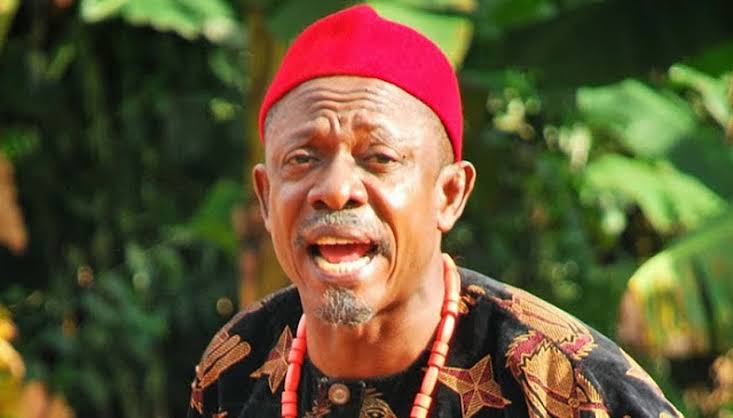
Veteran actor Nkem Owoh, widely known as Osuofia, has pushed back against claims that he credited Yoruba people with starting Nollywood. He said his remarks were about the origins of home video in Nigeria, not the brand name that later defined the industry.
Speaking on the Curiosity Made Me Ask podcast with Isbae U, Owoh insisted the criticism misrepresented what he actually said.
“I never said Yoruba started Nollywood. When did Nollywood come out? When we started film, there was no Nollywood as a name. We sat together and we exchanged ideas on how the thing is going to come into fruition and eventually we chose Nollywood,” he said.
He pointed to the work that came before the name existed.
“Ogunde is not Igbo. I am telling you that Yoruba started it,” Owoh added, referring to veteran filmmaker Hubert Ogunde.
He then drew a clear line.
“Yoruba did not start Nollywood; they started home video and the rest.”
The distinction sits inside a long-running argument about who built Nigeria’s film industry. Yoruba travelling theatre practitioners, including Hubert Ogunde, Duro Ladipo and others, developed stage traditions and early cinema that predated the video boom. The commercial explosion that the world later called Nollywood is widely dated to 1992 with the Igbo-language video film Living in Bondage, produced and marketed by figures including Kenneth Nnebue. The name “Nollywood” itself arrived later, in the early 2000s. Owoh’s comments separate the earlier home-video and filmmaking tradition from the later branding.
Owoh, an Igbo actor best known for the Osuofia in London films, has previously discussed the same history in other interviews. His latest clarification aims to correct what he sees as a misreading of his position rather than to settle the broader ethnic debate.