


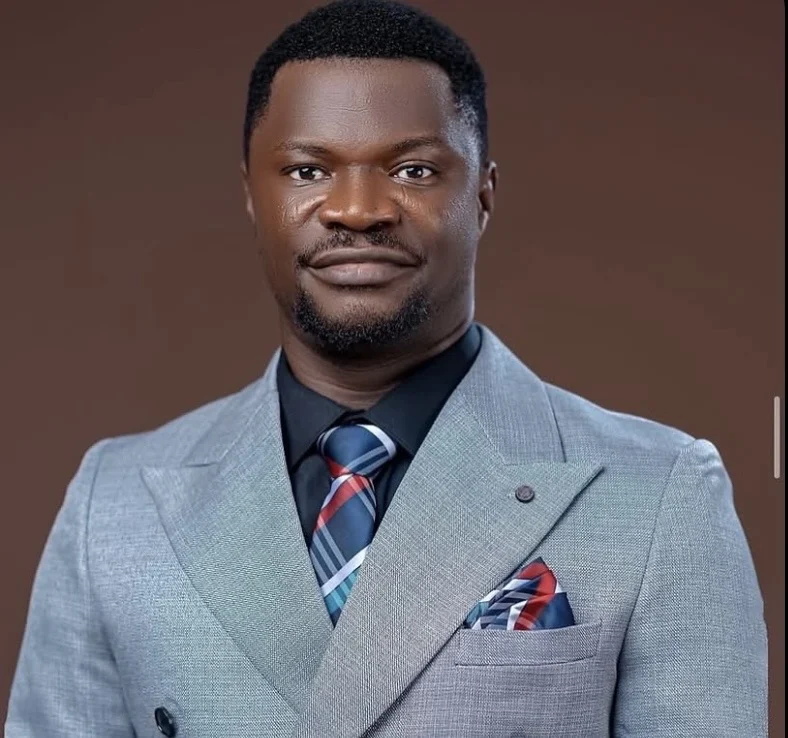
Gospel minister Olayemi Bayonile Bolaji, known as Toluwanisings, died on the morning of October 14, 2026, after slumping at his Ibadan residence while preparing to take one of his children to school. What followed has been a cascade of contested medical accounts, online allegations that drew legal warnings from other gospel figures, and a public rift between his widow and paternal family over where he should be buried.
His personal assistant, Babadunni Gbolabo, said the singer had shown no signs of illness.
“There was nothing wrong with him. He was very fine and in perfect condition. He just slumped,” Gbolabo recounted.
Those with him tried to resuscitate him and then moved him from hospital to hospital.
“They went helter-skelter. They took him to some hospitals, but they were giving excuses. Some said doctors were not working because of the strike. Some did not admit him at all. That is how it went. We tried our best, including prayers. We took him to up to seven to eight hospitals in Ibadan, but God said his time was up.”
The claims prompted sharp public reaction and scrutiny of emergency care in Ibadan. University College Hospital (UCH), Ibadan, later stated it had no record of the singer being brought there. Public Relations Officer Funmilayo Enitan said:
“The hospital is running its services. The strike was a local one within the hospital; it was not a national strike. I was not aware that he was brought to UCH. I was not officially informed that he was brought to UCH. There was no record of it with the management.”
No official cause of death has been released. Some early online posts claimed he was turned away at two hospitals and pronounced dead at a third, but those accounts were not independently verified and differed in detail from the aide’s description of a longer search.
Speculation quickly spilled online. Videos and posts circulating on Facebook and other platforms alleged that gospel singer Tope Alabi and comedians Ayobami Ajewole (Woli Agba) and Olamide Oladimeji (Dele Omo Woli) were somehow connected to the death, with some claims extending to ritual killing. The posts were traced in part to a Canada-based page identified as Pastor Tayo Ministries.
Tope Alabi’s solicitors, Oakmount Legal Practitioners, issued a cease-and-desist letter dated October 24, 2026, demanding removal of the publications, a retraction and an apology within 24 hours. The letter described the claims as false and stated that they accused the singer of murder and ritual killing. Woli Agba and Dele Omo Woli’s solicitors, Gemgold Solicitors, issued a public notice warning that the allegations were “entirely false, unsubstantiated, and unfounded” and that continued publication would attract legal action for damages and injunctions.
A separate dispute opened over the burial. Toluwanisings’ father, Muniru Adekunle Olayemi, said he learned of the death online and later spoke with the singer’s widow, Elizabeth Damilola Akanbi (also referred to as Akanbi Elizabeth). According to the father, she preferred a church or public cemetery burial. He wanted his son buried inside the house the singer had built in Ibadan or, failing that, beside his late mother in Ikirun, Osun State.
“I don’t want him buried in a church or cemetery. I want him buried in his house and that will make me happy,” Olayemi said in one interview.
He later added:
“If they won’t allow him to be buried inside his house, they should bring him down to the village where his mother is and bury him beside her.”
He also disputed widely reported ages, insisting his son was born in July 1992 and was 34, not 44. The singer’s mother had died when he was an infant; he was raised largely with maternal relatives and later built a career that included songs such as “A Very Big God” and “Onibuore.” He left two young daughters.
The widow’s position, as reported from the father’s account and other coverage, was that she would not be comfortable living in a home where her husband was buried, particularly with the children. A paternal uncle, Lawal Ademola, publicly called for an investigation into the death before burial proceeded. As of late October, the final resting place had not been confirmed in available reports, and the disagreement continued to draw commentary on television and social media.
Amid the tension, photographs and videos showing the father’s living conditions in Ikirun circulated widely. Ikirun-born philanthropist and All Peoples Movement senatorial candidate for Osun Central, Dr. Ibraheem Luqman, sent a team to meet him. In a statement from his campaign organisation, he offered to relocate the elderly man to decent accommodation in Ikirun for at least two years and to sponsor the education of Toluwanisings’ two daughters through higher institution.
A member of the delegation told the father on camera:
“Luqman asked us to visit you for two reasons. Firstly, he is concerned about your housing condition. He said we should find a comfortable place for you to live for at least two years, where you can have peace of mind. He also said he wants to sponsor your grandchildren’s education up to the higher institution level, so he would like to have your permission.”
The offers remain pledges at the time of reporting. The singer’s death has left unresolved questions about the medical response that morning, unproven online claims that have drawn legal pushback, and a family still divided over where he should rest. The interventions for the father and daughters stand as one of the few concrete steps taken for those left behind.