


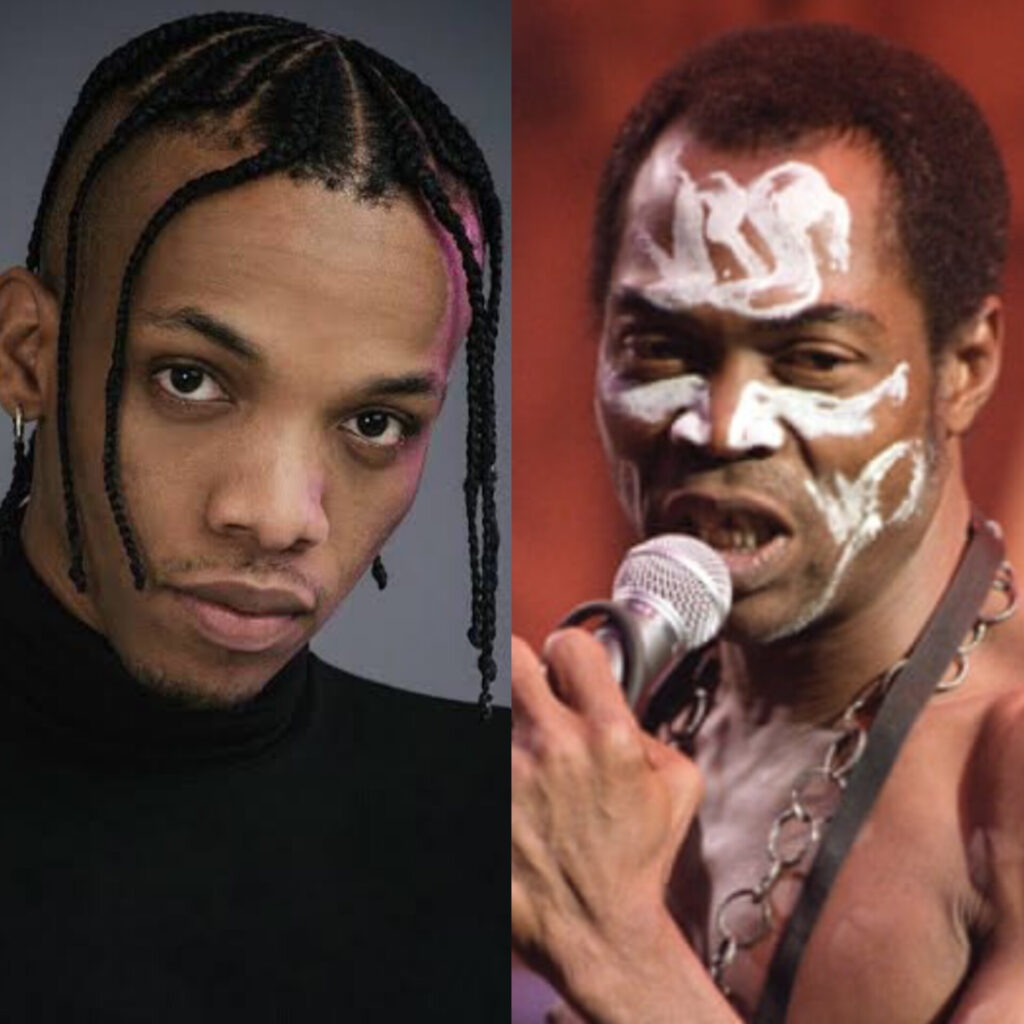
Tekno has gone back on air to fight a sentence he says he never uttered. On Yanga FM, the singer argued that growing up in Bauchi without Yoruba around him is not the same thing as erasing Fela Anikulapo-Kuti from history, and that fans turned “I didn’t listen to Fela” into “Fela did not start Afrobeat.” He then went further than a clarification. He said the late icon was never his king and never will be.
Augustine Miles Kelechi Okechukwu, born in Bauchi on 17 December 1992 to an Igbo family with roots in Ebonyi, has been here before. In August he told Hot 97 that Fela should not be treated as the only ancestor of the sound now sold worldwide as Afrobeats, and he pointed to highlife names his father played at home, especially Oliver De Coque. That clip split the timeline between people who heard a useful reminder about eastern legends and people who heard a man rewriting the book. The Yanga FM tape is him answering the second group.
“First of all, I grew up in the north. I was born in Bauchi. My dad is a proper Igbo man. No one around me spoke Yoruba. I was basically saying I didn’t hear Fela while growing up. I didn’t say he’s not the originator of afrobeat. How can I say ‘I didn’t listen to Fela growing up’ and it gets twisted into ‘Fela is not the originator of afrobeat.’”
That distinction matters in the argument even if it will not end the argument. Historians and most musicians still treat Afrobeat, without the s, as the genre Fela built in the 1970s from highlife, jazz, funk and protest. Afrobeats, with the s, is the later pop umbrella that carried Tekno’s own hits across the world. Mixing the two words is how a childhood playlist becomes a blasphemy charge. Tekno is now insisting he only described his house, not an origin story.
He also refused to pretend Fela lives inside every record he has made.
“I mentioned Oliver De Coque who made highlife music but as a Nigerian, his sound was categorized as afrobeat. Out of every single record I’ve made, the only record I’ll say is like Fela’s afrobeat is Rara. Fela didn’t sing songs like Duro, Pana, or Yawa.”
Of his records, Rara is the one he will concede sits closer to the older, horn-heavy protest pocket associated with Fela. The rest, he said, came from another well.
“We all love Fela, but I didn’t listen to him growing up. Even as an adult, I still didn’t listen to him. I never got an inspiration from Fela’s music. The country’s state inspires me. Fela is a legend but I don’t listen to him.”
Then he reached for a football comparison that will not soothe anyone who treats Fela as compulsory homework.
“It’s like saying I only watch Ronaldo and Messi fans start attacking me. And it doesn’t mean Fela or Messi aren’t great either. Fela was never my king and he will never be my king. Oliver De Coque and about two other legends I can’t remember their names are my kings.”
Oliver De Coque, the late highlife guitarist, has long been a giant in the east and still sits outside the global brochure that Fela occupies. Tekno’s first interview already said his father’s records were full of that world, and that Fela got the louder credit partly because he travelled with a band the planet could see. Supporters heard a man dragging forgotten names back into the light. Critics heard a star confusing highlife with Afrobeat and stepping on a grave to do it.