


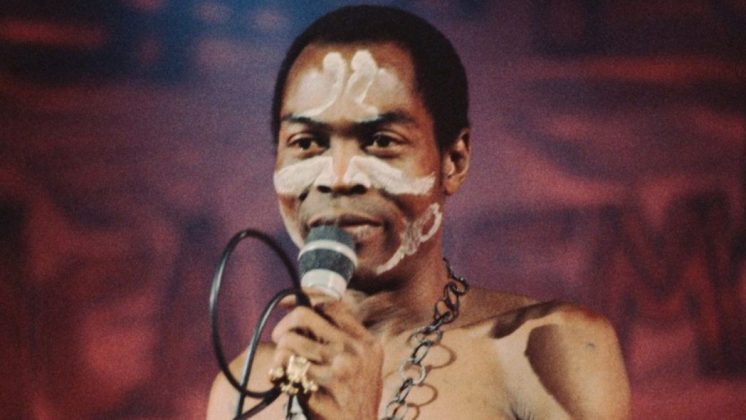
The Recording Academy has announced that legendary Afrobeat pioneer Fela Anikulapo-Kuti will be honoured with a Lifetime Achievement Award at the 2026 Grammy Awards, sealing his place among the most influential music figures in global history.
The honour will be presented at the Special Merit Awards Ceremony on January 31, 2026, one day before the main Grammy Awards night in Los Angeles. Other global icons named for the prestigious recognition include Whitney Houston, Chaka Khan, Cher, Paul Simon, and Carlos Santana.
According to the Recording Academy, the Lifetime Achievement Award is reserved for performers who, during their lifetime, made “creative contributions of outstanding artistic significance to recorded music.” The award is frequently given posthumously, recognising legacies that continue to shape music long after an artist’s passing.
Fela Kuti, who died in 1997, never won a Grammy while alive. However, his global influence has only grown stronger with time. In 2025, his politically charged 1976 album Zombie was inducted into the Grammy Hall of Fame, making it one of the rare African records to receive the honour.
Reacting to that milestone, his son Femi Kuti described the recognition as a powerful affirmation of his father’s impact, noting that Fela’s music still speaks to new generations across continents.
Widely credited as the creator of Afrobeat, Fela fused jazz, funk, highlife, and traditional African rhythms into a revolutionary sound that became both musical and political. Beyond the stage, he was a fearless critic of military rule, political corruption, and social injustice, themes that defined much of his work and public life.
Nearly three decades after his death, Fela’s legacy remains alive through global performances, exhibitions, and the annual Felabration festival in Lagos. His music continues to power conversations around freedom, resistance, and African identity worldwide.
The 2026 Lifetime Achievement Award places Fela Anikulapo-Kuti in an elite circle of global legends and further cements his status as one of Africa’s most influential cultural icons in recorded music history.